
The Lighthouse Coaching & Consulting

TEAM DEVELOPMENT
Your office is full of talented people who don’t work like a team.
The skills are there. But people go quiet in the meeting and say the real thing in the hallway, work routes around certain colleagues, and the same tension keeps coming back no matter how many times you address it. Whether it’s a department you lead or a practice you own, this is work on what’s actually between your people, not another offsite that fades by Friday.
TEAM DEVELOPMENT
Your office is full of talented people who don’t work like a team.
The skills are there. But people go quiet in the meeting and say the real thing in the hallway, work routes around certain colleagues, and the same tension keeps coming back no matter how many times you address it. Whether it’s a department you lead or a practice you own, this is work on what’s actually between your people, not another offsite that fades by Friday.
WHY IT KEEPS HAPPENING
The friction isn't usually about the work
Your people are good at their jobs. The problem isn’t the work, it’s what goes on between them. It's the lack of trust that keeps someone from speaking up, the friction that quietly routes a project around a certain colleague, the unspoken rules about who’s allowed to challenge whom. That’s what turns a capable group into silos.
There’s a reason it’s so hard to fix from the inside. Over time, every team settles into patterns. Who talks and who stays quiet. What gets said in the room and what only gets said afterward. Which disagreements get worked through and which ones everybody learned to avoid. A team builds a box of its own, and those patterns become “just how things work around here” — invisible and unspoken.
A better agenda or one more offsite won’t move it, because the patterns live between people, under the surface. That’s the layer this work reaches.
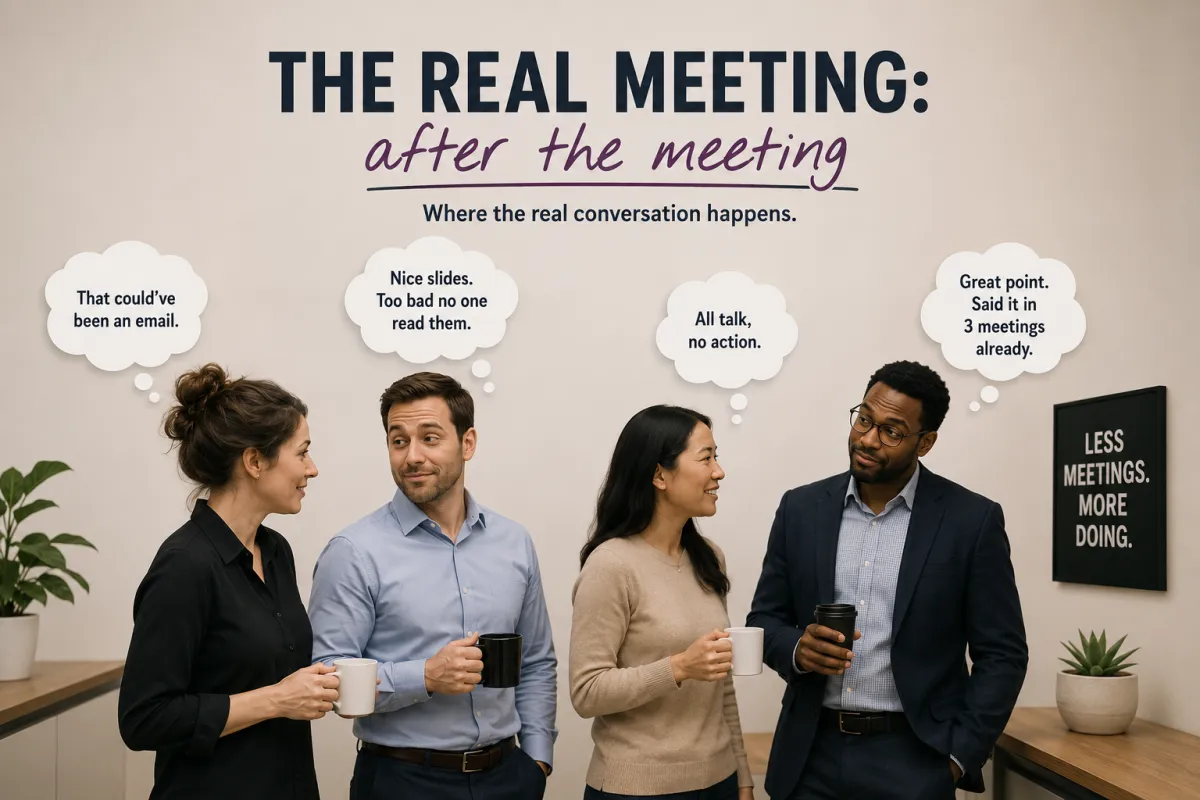
“The friction usually isn’t about the work. It’s about patterns nobody on the team can see from the inside.”
How it works
We make the patterns visible, then turn that into how the team actually operates — and make it stick after the sessions end.
1
Read the team
Each person takes the iEQ9, and together they form a picture of the team as a whole — where the strengths cluster, where the blind spots overlap, and where the friction is built in rather than personal.
2
Surface the patterns
In facilitated sessions, the team sees its own patterns named out loud, safely. The hallway conversation finally happens in the room.
3
Build new ways of working
We turn that into agreements the team actually uses — how decisions get made, how disagreement gets handled, how people hold each other to account without it turning personal.
4
Make it stick
Old patterns snap back without reinforcement. We build in follow-through and re-measure, so the new way of working lasts past the last session.
How it works
We make the patterns visible, then turn that into how the team actually operates — and make it stick after the sessions end.
1
Read the team
Each person takes the iEQ9, and together they form a picture of the team as a whole — where the strengths cluster, where the blind spots overlap, and where the friction is built in rather than personal.
2
Surface the patterns
In facilitated sessions, the team sees its own patterns named out loud, safely. The hallway conversation finally happens in the room.
3
Build new ways of working
We turn that into agreements the team actually uses — how decisions get made, how disagreement gets handled, how people hold each other to account without it turning personal.
4
Make it stick
Old patterns snap back without reinforcement. We build in follow-through and re-measure, so the new way of working lasts past the last session.
Three ways to do the work
Which one fits depends on the team and where it is right now. We sort that out together on the call.
Team Intensive
A focused engagement — the group iEQ9 plus a series of facilitated sessions over a set period.
Ongoing Team Coaching
Recurring work with the team and its leader over several months, for groups that want the change to last.
Leader + Team
The team work paired with one-on-one coaching for the leader, since a team rarely outgrows the patterns of the person leading it.
Three ways to do the work
Which one fits depends on the team and where it is right now. We sort that out together on the call.
Team Intensive
A focused engagement — the group iEQ9 plus a series of facilitated sessions over a set period.
Ongoing Team Coaching
Recurring work with the team and its leader over several months, for groups that want the change to last.
Leader + Team
The team work paired with one-on-one coaching for the leader, since a team rarely outgrows the patterns of the person leading it.
WHAT CHANGES
What’s different when a capable group starts working like a team
Not promises, the changes teams actually notice.
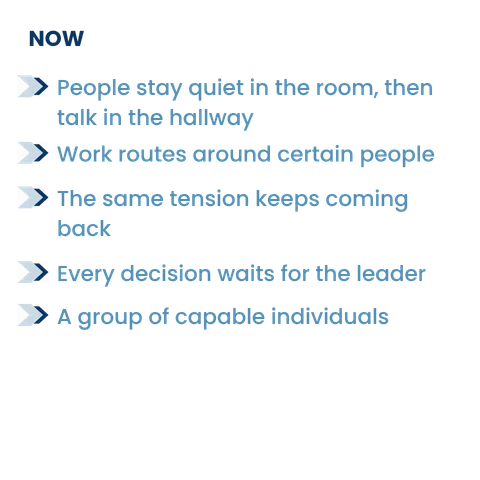
NOW
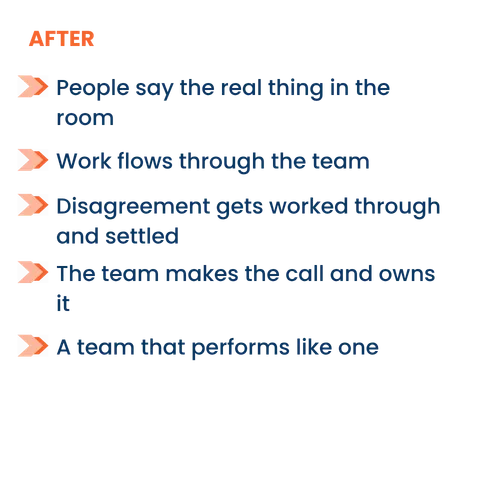
AFTER
People stay quiet in the room, then talk in the hallway
People say the real thing in the room
Work routes around certain people
Work flows through the team
The same tension keeps coming back
Disagreement gets worked through and settled
Every decision waits for the leader
The team makes the call and owns it
A group of capable individuals
A team that performs like one
WHAT CHANGES
What’s different when a capable group starts working like a team
Not promises, the changes teams actually notice.
A CONVERSATION FIRST
If your team is capable but not clicking, let’s talk.
Thirty minutes to look at what’s getting in the way and whether this work is the right fit. No pitch, no pressure.
Lighthouse Coaching — lighting the way to a team that works like one.

Quick Links
Contact Us
972-345-0127
108 Falabella Trail
Georgetown, TX
Quick Links
Contact Us
972-345-0127
108 Falabella Trail
Georgetown, TX